
Revolutionizing Government & Public Sector Identity Management
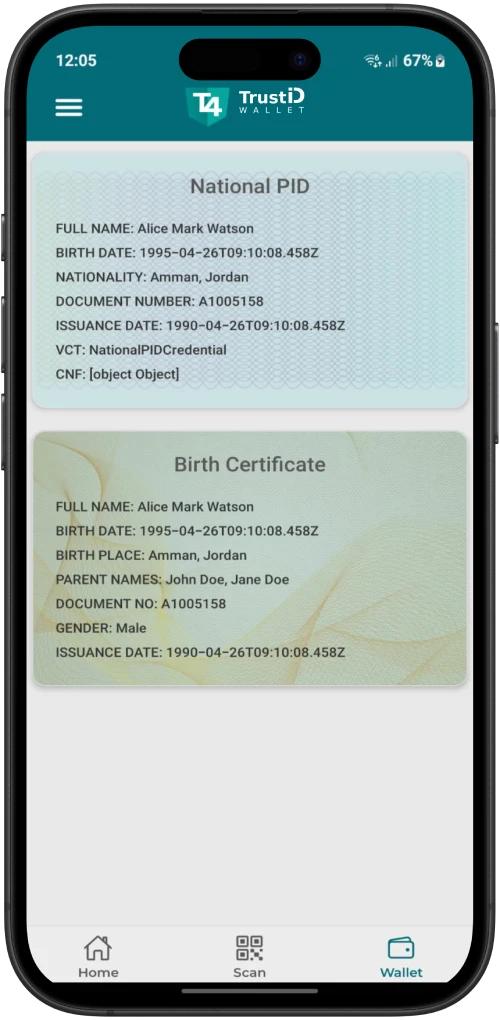
Table Of Content
Overview

Challenges in Public Sector Identity
National identity programs, driver licensing systems, and cross-border travel documents are critical for public safety and governance. Yet, governments often face:
- Data Centralization Risks: Traditional ID databases are attractive targets for cyberattacks and often struggle to meet evolving privacy regulations.
- Administrative Inefficiency: Physical ID issuance and verification processes are slow and expensive, requiring manual reviews and in-person visits.
- Cross-Border Verification: Verifying national IDs or travel documents across borders remains complex and costly, limiting the scope for secure mobility and international cooperation.
- Outdated Technology: Legacy systems can’t keep up with modern digital expectations and don’t support secure digital interactions.
How TrustiD Bridges the Gap
TrustiD brings governments into the era of Self-Sovereign Identity (SSI) with a secure, standards-compliant platform. Here’s how:
- National PID (Personal ID): Governments can issue and manage PID credentials (National IDs, residence cards, etc.) as verifiable digital credentials, securely stored in the citizen’s TrustiD Wallet.
- Mobile Driving Licenses (mDL): TrustiD supports mDoc-compliant mDLs (mobile driver’s licenses), enabling drivers to carry a secure, digital version of their license—aligned with ISO 18013-5.
- ICAO DTC: With built-in support for ICAO Digital Travel Credentials (DTCs), TrustiD lets governments issue secure digital travel documents that comply with global aviation standards—streamlining border processes while maintaining maximum security.
- OpenID4VC & DIDComm: TrustiD uses open standards like OpenID4VC and DIDComm to ensure interoperability with other identity systems, enabling secure cross-border verification and data sharing.
- Revocation & Expiry Management: The platform supports credential revocation and expiry management, ensuring that only valid, up-to-date credentials are used for verification.
A New Model for Citizen Services
Here’s how TrustiD can transform government processes:

Citizen Enrollment

Seamless Service Delivery

Interoperable Ecosystem
Key Benefits for Governments & Citizens
- Improved Security & Privacy: Digital credentials are cryptographically signed and tamper-proof. Citizens control what they share, aligning with data protection regulations like GDPR.
- Reduced Costs & Complexity: Digital identity reduces paperwork, manual verification, and repetitive onboarding processes—lowering administrative overhead.
- Frictionless Digital Services: Citizens can access online services and in-person benefits with a tap—improving public trust and service adoption.
- Global Interoperability: ICAO DTC support ensures that travel credentials meet international standards, enabling smoother border crossing and travel processes.
- Disaster Resilience: In emergencies, decentralized digital credentials help maintain access to services even when physical IDs are lost or damaged.
Mobile Wallet and mDL: A Real-World Example
Imagine a citizen, Ahmed, who uses the TrustiD Wallet on his phone. His mobile wallet holds:
- A digital National ID (PID)
- A mobile driver’s license (mDL) aligned with ISO 18013-5
- An ICAO-compliant Digital Travel Credential (DTC)
Ahmed can use these to:
- Prove his age when applying for a government subsidy or public benefit
- Show his driving license during a routine traffic check—no physical card needed
- Use his DTC at an airport for a seamless, contactless border experience
Best of all, Ahmed controls when and how these credentials are shared—building trust and ensuring data privacy.
Future-Proof Identity: Supporting mDL & ICAO Standards
TrustiD’s platform isn’t just about digital identity—it’s about future-proofing. By supporting mDoc (mobile document) standards for driver’s licenses and the ICAO DTC framework, governments can confidently roll out modern, internationally recognized digital identity systems.
These standards ensure:
- Secure cryptographic verification, even when offline
- Interoperability with border control and government systems worldwide
- Reduced vendor lock-in and long-term viability of identity programs


